What Are Smart Contracts in Crypto? How They Work and Real-World Uses
Smart contracts are the reason crypto apps can execute swaps, staking, and minting. They’re not “smart” in the flexible sense. They’re programs that run exactly as written. That consistency is powerful, but it also means bugs, bad inputs, and oracle failures can produce irreversible outcomes.

Key Takeaways
- Smart contracts are onchain programs that execute “if/then” rules automatically once you send a valid transaction.
- They don’t guarantee safety. They guarantee consistency, which can be great until a bug or bad input shows up.
- As crypto becomes more usable day-to-day, more apps are designed to make onchain actions easier to understand with clearer steps and confirmations.
You click Swap, Stake, or Mint, and something just… happens.
No support ticket. No waiting. No one asking you for extra confirmations.
It feels smooth enough that it almost seems like magic.
It isn’t. It’s just code doing exactly what it was told to do.
In crypto, that “code” is usually a smart contract. Once you understand how they work, you start to see the logic behind every action.
This guide explains what is happening under the hood when you interact with a smart contract.
What Is a Smart Contract?
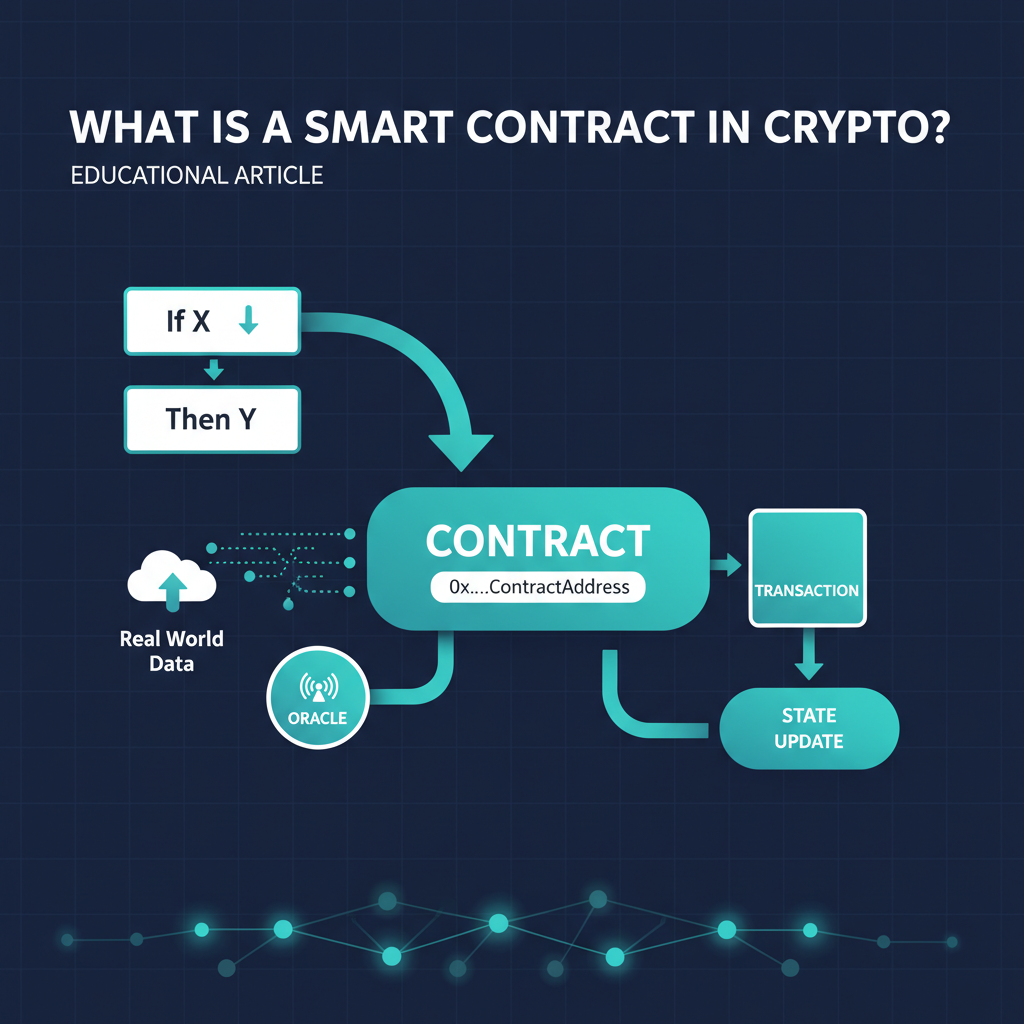
A smart contract is code stored on a blockchain that runs automatically when certain conditions are met.
That sounds formal. In practice, it’s code that executes instructions.
Sometimes that code represents an agreement between people, and sometimes it just automates a process without any legal contract behind it.
A simple way to think about a smart contract is a set of rules: “if X happens, do Y.”
The key idea is execution. Once a contract is deployed, it runs as written. No approvals. No manual intervention.
And the concept isn’t new. Nick Szabo described “smart contracts” in the 1990s as automated agreements. Crypto just made that idea practical at scale.
How Smart Contracts Work
At their core, smart contracts are simple:
- You send a transaction.
- The blockchain verifies it.
- The contract executes the same logic every time.
That does not mean it’s “safe.” It means it’s consistent.
1) A Developer Writes and Deploys The Contract
A developer writes the code. The code defines:
- What the contract can store
- What actions it allows (deposit, withdraw, swap, mint)
- What checks are required before it runs
When it’s deployed onchain, the contract gets its own address. It can hold assets, and its behavior is effectively locked in.
That does not mean it can never change. Some systems use upgrade patterns or admin controls. But the baseline is: you should assume deployed code will do exactly what it says, for better or worse.
2) You “Use An App,” But You’re Really Calling A Contract
When you use a crypto app, you’re usually doing three things:
- Signing a transaction with your wallet
- Calling a function on a contract
- Sending inputs like amounts, addresses, or parameters
If the transaction passes the contract’s checks, it executes.
No one reviews it. No one steps in if you made a mistake.
3) The Outcome Gets Recorded Onchain
Once executed, the result is written to the blockchain.
It’s public, trackable, and typically irreversible.
That’s why crypto can feel instant when it works, and unforgiving when it doesn’t.
Where Smart Contracts Are Used
You’ve probably used smart contracts already, even if you never thought about them.

Decentralized Finance (DeFi)
Smart contracts run the rules for things like:
- Lending and borrowing
- Staking
- Swaps
- Collateral and liquidations
You deposit assets, and the contract enforces the logic. There’s no middle layer quietly “fixing” errors for you.
Non Fungible Tokens (NFTs)
NFTs are smart contracts that track ownership.
They can represent tickets, memberships, licenses, and in-game items. They can also enforce rules like royalties or transfer restrictions.
That does not mean every NFT is useful. It means the ownership system is programmable.
Prediction Markets
Prediction markets are a clean example of “code executes outcomes.”
On Polymarket, users trade on whether real-world events happen, and settlement happens through smart contracts.
But that raises a key question:
If the outcome happens in the real world, how does the blockchain learn it?
Which brings us to the hidden dependency behind a lot of smart contract utility.
The Hidden Piece: Oracles
Smart contracts only know what’s onchain.
They do not know exchange rates, election outcomes, weather, or sports scores unless something brings that data in.
That “something” is an oracle.
Oracle networks connect blockchains to offchain data sources and systems.
And this is where smart contracts can become fragile in a very specific way:
If the contract executes perfectly, but the oracle input is wrong, the result is still wrong.
Just efficiently wrong.
Smart Contract Advantages & Disadvantages
Smart contracts are built for one thing: executing rules exactly as written.
That makes them reliable, fast, and consistent. It also means they’re rigid. If something falls outside the rules, the contract won’t adapt.
| Where they work well | Where they don’t help much |
|---|---|
| Immediate execution once conditions are met | Situations that need interpretation |
| Less reliance on intermediaries | Edge cases no one coded for |
| Rules that are explicit and enforceable by code | Real-world legal enforcement |
| Transparent and auditable systems | Privacy (many blockchains are transparent by default) |
What Can Go Wrong With Smart Contracts
Smart contracts don’t guarantee safety. They guarantee consistency.
That’s a different promise.
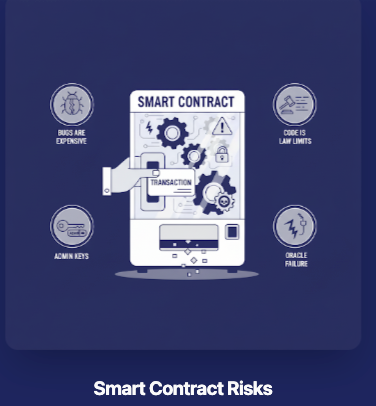
Bugs are Expensive
If there’s a flaw in the code, the contract doesn’t “sort of work anyway.”
It works incorrectly, consistently, until someone exploits it or funds get stuck.
“Code Is Law” Has Limits
The contract does exactly what it’s written to do.
That does not mean it reflects what the parties intended. It does not mean it aligns with how a court would interpret the situation.
Code executes instructions. Legal systems interpret agreements.
Those two don’t always match.
In some cases, a smart contract might automate part of an agreement, but the legal meaning of that agreement still depends on jurisdiction, context, and interpretation.
So even if execution is automatic, enforcement and disputes don’t disappear.
They just move outside the code.
Admin Keys and Governance Can Change The Rules
Some contracts have upgrade paths, admin permissions, or governance controls.
That can be good (fixes, emergency responses). It can also add trust assumptions that aren’t obvious from the UI.
Oracles Are a Real-World Weak Point
If the contract depends on outside data, the data feed becomes part of the security model.
Wrong input can produce correct execution of the wrong outcome.
What Smart Contracts Really Are
Smart contracts aren’t flexible. They’re not forgiving. They don’t negotiate.
They hold assets, wait for valid inputs, execute the same logic every time, and record the result.
That’s powerful.
It’s also why mistakes can feel immediate.
So when something “just works” in crypto, it’s not magic.
It’s a system doing exactly what it was told to do.
Rate this post
More from the blog
 Learn
LearnCrypto Transactions Explained: Why They Are Irreversible
Once a transaction is confirmed on the blockchain, it becomes part of a permanent public record and cannot be reversed. This article explains how crypto transactions are processed, why they are irreversible, and the key steps you can take to avoid costly mistakes when sending cryptocurrency.
Stella Abisinuola·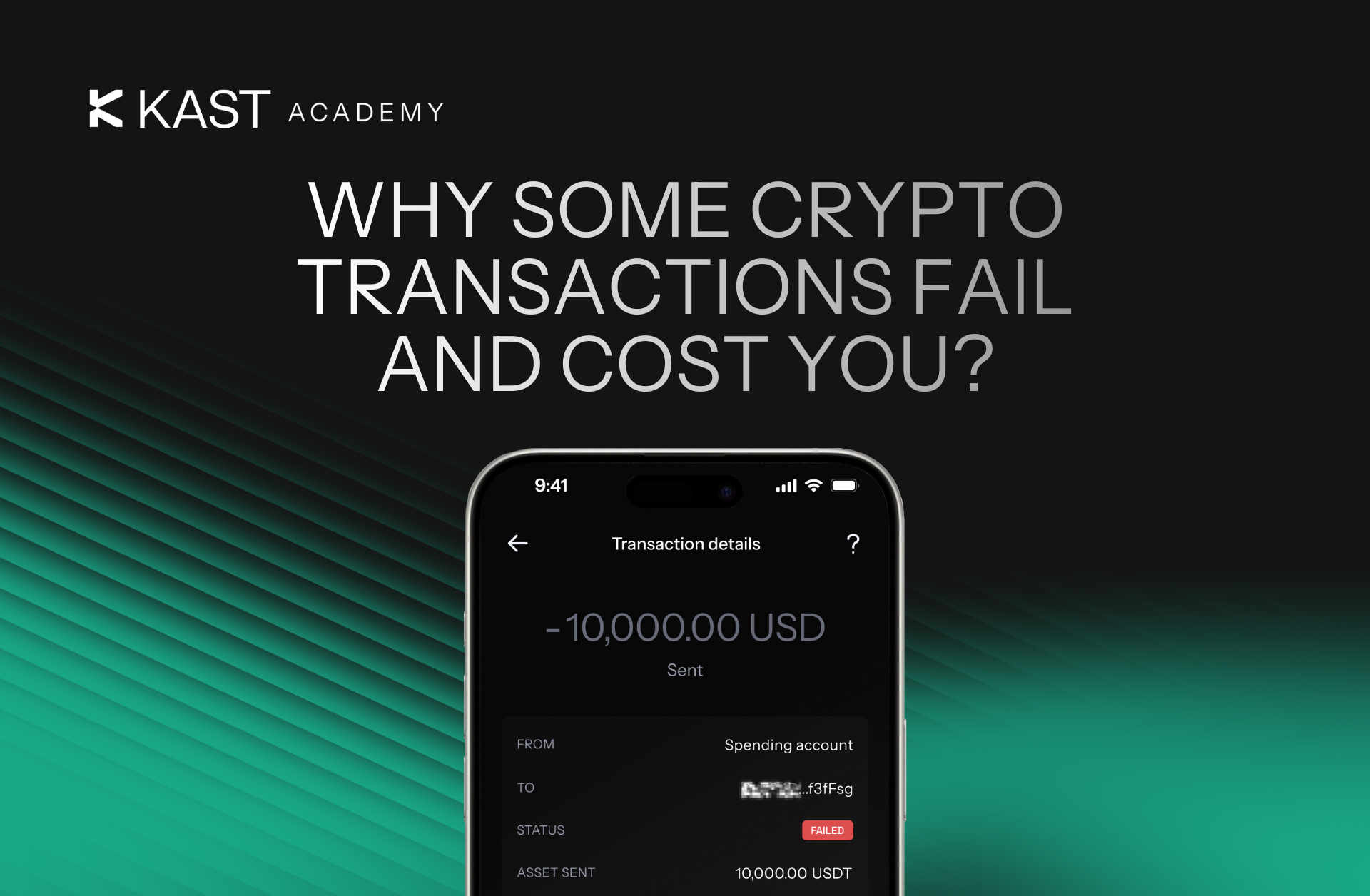 Learn
LearnGas Limits: A Beginner's Guide on Optimizing Your Transaction Fees
Gas limits and gas prices decide whether a crypto transaction succeeds, fails, or gets stuck waiting. This guide breaks down what those numbers actually mean, how fees are calculated, and how to avoid paying for transactions that don’t go through.
Valdrin Tahiri· Learn
LearnBlockchain Confirmations Guide: ‘Instant’ Payments Aren't Always Final
Crypto payments feel instant, but finality takes time. Here’s what really happens after you hit send, why confirmations matter, and how KAST removes that friction from everyday spending.
Valdrin Tahiri·