Meet KAST CEO: Raagulan Pathy

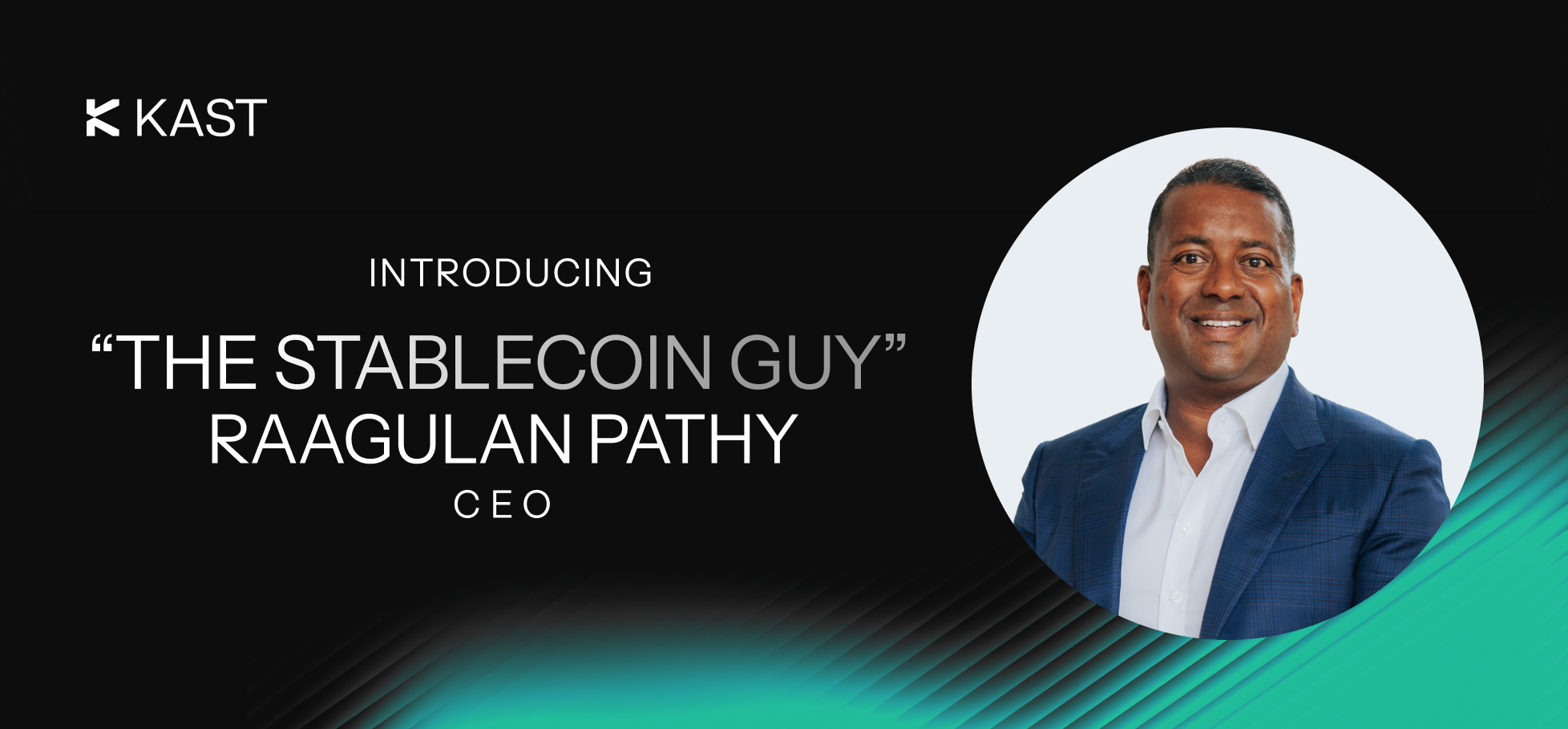
Raagulan (Raags) Pathy does not talk theoretically about global finance. He talks about it from lived experience. He has crossed borders more than most people ever will. He has lived through systems that failed, systems that excluded, and systems that worked only for a few. Today, as Founder and CEO of KAST, he builds financial infrastructure for people whose lives do not fit inside one country, one bank, or one set of rules.
He speaks plainly about what he has seen. He will tell a room, without softening it, that
“banking is f*cked.”
He frames this line as a reality check, not a slogan. He has watched money move poorly around the world, especially when people needed it most.
His story does not begin in boardrooms or tech hubs. It begins in a war zone.
Early Life Shaped by Conflict
Raagulan Pathy was born in Jaffna, Sri Lanka, in the early 1980s, during a civil war that shaped an entire generation. Violence, uncertainty, and forced movement defined daily life. When he was five years old, his family fled the country with almost nothing. They left behind land, possessions, and certainty, carrying only what they could hold and the hope of safety.
They resettled in Adelaide, Australia. The city offered peace and stability, but opportunities felt distant. Adelaide was quiet, structured, and limited in scale. For a family rebuilding from displacement, survival came before ambition.
His earliest lessons about money came from watching trust break and responsibility take its place. During the war, his father ran a small money transfer business serving migrant workers. One partner stole funds that belonged to families who had saved for years. His father chose to repay every customer, even though it meant selling generational land.
“You can have nothing, son, but have your reputation,”
his father told him. That decision left a permanent mark. Integrity, he learned, was not a slogan. It was an action taken when the cost felt unbearable. That belief still defines how he builds today.
Growing Up With Limits, Looking Beyond Them
Adelaide gave Raagulan safety, but it also showed him the limits of geography. He grew up aware that where you live shapes what you can access. Education helped, but it did not remove the invisible ceilings that came with distance from global centers.
By his early twenties, he felt constrained. The dot-com era was reshaping technology, yet much of that energy lived elsewhere. He believed experience would teach him more than formal paths ever could.
At 20, he took his first major international trip. It forever changed his trajectory. Travel exposed him to different systems, cultures, and economic realities. He did not observe from the outside. He immersed himself. Over time, this became a pattern. He went where growth was happening. He learned by living inside change.
He never relied predefined playbooks. Instead, he built perspective through repetition. New countries. New cities. New systems. Over many years, this approach sharpened his instinct for how infrastructure shapes human behavior.
Infrastructure as a Force for Change
At 22, Raagulan took a role running data centers and infrastructure for MTN in Lagos, Nigeria, and he stepped into a market where basic connectivity still felt out of reach for most people. At the time, Nigeria had roughly 140 million people but fewer than 500,000 phone lines, so access to communication stayed limited and uneven, even in major cities.
Then the rollout accelerated and the country shifted faster than many expected, as mobile networks expanded and millions of people gained their first reliable way to connect. As a result, communication became easier, small businesses found new customers, and daily life started to reorganize around instant access rather than long delays.
That period changed how he thought about systems because he saw infrastructure produce results that people could feel immediately. When access expanded, people moved faster, relied less on gatekeepers, and found new ways to participate in the economy, which later became a reference point for how he looked at financial access and the gaps KAST now tries to close.
Rebuilding After a Hard Fall
After Nigeria, Raagulan co founded Lazoo Cloud and built it into a bootstrapped company of about 70 employees. At its peak, the business was doing around $100 million in revenue. Then conditions changed, a large share of that revenue disappeared, and the company collapsed.
The experience became one of the hardest lessons of his career. He has said it changed how he thinks about cash flow, risk, and survival. Instead of planning only for normal conditions, he learned to ask what happens if most of the business disappears and how long the company can keep operating if that happens.
At the time, he had personally backed early obligations, so the fallout was not only professional. While living in Australia, where bankruptcy rules were much stricter then, he chose not to declare bankruptcy. Instead, he worked through the debt, negotiated where he could, and rebuilt step by step.
He later moved into enterprise sales at Amazon Web Services, where he developed a more structured approach to execution, long sales cycles, and operational discipline. That period also shaped how he leads today, with a stronger focus on resilience, careful planning, and building a business that can scale on solid foundations.
A Pattern of Entering Before the Shift
Looking back, his career shows a consistent pattern. He often entered industries just before they reached mass adoption.
He joined Amazon Web Services in 2013, when many companies were still debating whether cloud infrastructure was secure enough for core systems. Soon after, he moved to Facebook, where he helped expand Workplace across Asia Pacific before remote collaboration tools became widely adopted.
He later joined Zoom, working on enterprise adoption before the platform became a global default during the COVID pandemic.
Each role deepened his understanding of platforms, distribution, and timing. Rather than chasing trends, he positioned himself around structural shifts as they were beginning.
Then came Circle.
Becoming “The Stablecoin Guy”
At Circle, Raagulan went deep into stablecoins early, and at scale. He led Asia Pacific expansion and spent years watching how digital dollars moved across regions, use cases, and regulatory environments.
That work shaped a clear view of the market. Stablecoins may appear global, but in practice they remain overwhelmingly tied to the US dollar. As he put it, “99% are US dollars, and that hasn’t shifted pretty much since the beginning.” For him, that dominance was not surprising. Stablecoins are internet money, and the internet still trades in dollars.
Travel across Asia, Africa, Latin America, the United States, and Europe gave him a close view of how that played out on the ground. In many emerging markets, USDT dominated. In the United States and Europe, USDC had stronger traction. The split reflected local regulation, liquidity, and trust. Still, the larger pattern stayed the same. People were turning to digital dollars because local banking systems and cross border payment rails often did not meet their needs.
He also saw stablecoins as part of a bigger monetary shift, not just a crypto product. In his view, dollar dominance was already well established in global trade, and stablecoins were accelerating it online.
“Stablecoins are money on the internet,”
he said.
“And the internet trades in dollars.”
At the same time, he saw the limits clearly. Stablecoins made transfers easier, but they still struggled with the mechanics of everyday payments, including pre authorizations, refunds, deposit holds, and predictable settlement timing. That gap stayed with him. Stablecoins were powerful building blocks, but they were not yet a complete financial system.
Those observations shaped what came next.
The Idea Behind KAST
KAST did not appear suddenly. It emerged from years of accumulated experience, failure, observation, and travel.
By 2024, Raagulan had lived across more than 10 cities and visited over 100 countries. He understood how often people fell through financial cracks simply because they lived between systems.
He did not want to build a complex crypto platform. He wanted to build something functional. Something that worked for people moving across borders, holding different passports, and earning in different currencies.
KAST focused on simplicity. Clear accounts. Real payments. Stable value. Infrastructure that respected how people actually live.
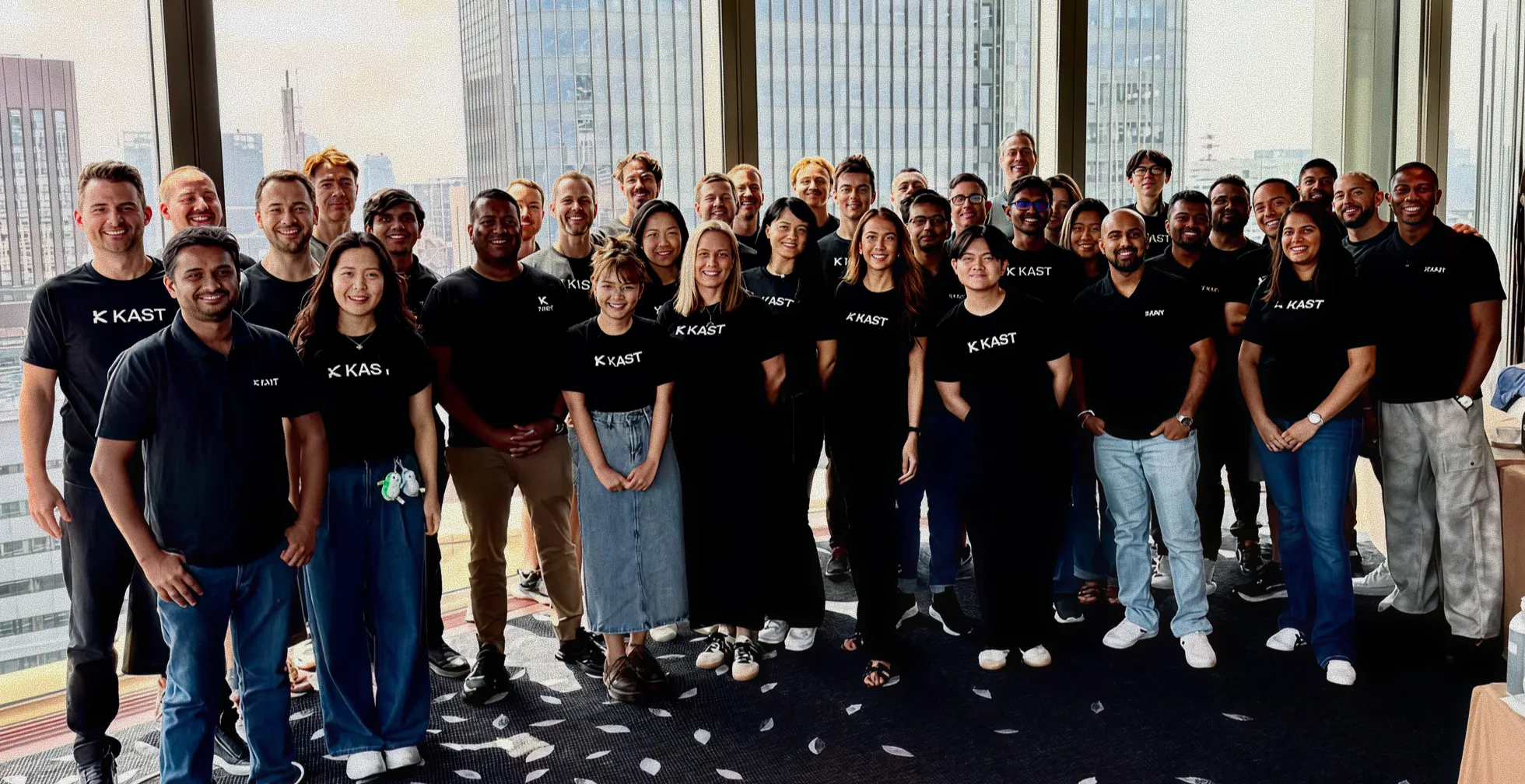
Under his leadership, KAST grew quietly. The team stayed lean. The product stayed focused. Users arrived through trust rather than hype. Adoption spread across more than 170 countries.
For Raagulan, growth mattered less than usefulness. He measured success by whether someone could rely on the product without thinking about it.
Where KAST Goes Next
Raagulan does not frame KAST as a product for a niche group. He frames it as infrastructure for scale. In one interview, he described the gap he's chasing in plain numbers:
“There’s a few hundred million people who are interested in crypto and trading crypto, but the need for stablecoins and a need for banking is like a five-billion-person problem.”
That framing ties directly to what KAST already built so far. The company reached users across more than 170 countries while keeping the product simple enough for everyday use. It also stayed focused on the basic promise that people actually want: money that holds stable value, moves across borders, and works when life gets complicated. Raagulan’s point is that most users should not need to care what rails sit underneath. In the same interview, he said the goal is to make it feel like a bank, even if crypto rails power it.
%20(1).jpg)
He also thinks in decades, not quarters. He has described stablecoins as “dumb” in their current form because they still work more like a basic transfer layer than a complete financial system. They move value efficiently, but they do not yet handle the full complexity of everyday finance. That long view shapes how he talks about ambition. In a recent public post, he wrote:
“99.9% will think it’s not possible, but that’s what keeps me going.”
The personal theme stays consistent with the product theme. Movement shaped him, and it shaped KAST. He often tells young people,
“Don’t cage yourself, go to big cities, because opportunities are only as big as the place in which you’re living.”
He treats that idea as both life advice and a design principle. People move, so money has to move with them.
That is the tie back.
Raagulan’s story begins with borders closing in. KAST exists because he wants borders to matter less in financial life.
He's building toward a world where access does not depend on birthplace, passport, or which bank decides you belong.
Spend your crypto like cash.
USDC, USDT & USDe. Global reach. Instant card.