KAST Card Security: Fraud Is Usually a Chain
Fraud rarely starts big. It begins with small signals like phishing texts, fake pages, or tiny test charges. This KAST card security guide explains how fraud chains work and how to stop payment fraud early before larger losses happen.

Fraud rarely starts with one big hit. It usually starts small.
A text that looks like your bank. A fake checkout page. A password reused on the wrong site. A tiny test charge you almost ignore. Then the real damage comes after that.
That pattern matters. Recent U.S. and global data shows the same thing from different angles: phishing and spoofing remained the most reported cyber-enabled fraud category in the FBI’s 2025 IC3 report, while the FTC said text messages were the top reported contact method in 2025 when people identified how scammers reached them. Visa also said fraud is shifting fast, with criminals adapting across the payment stack instead of relying on one old trick.
How the chain usually works
Most payment fraud follows a sequence. Not always the same one, but close.
| Step | What happens |
|---|---|
| 1. Access | A scammer gets something small: your login, card details, or trust |
| 2. Test | They try a tiny charge, a login attempt, or a fake verification |
| 3. Scale | Once it works, they go bigger or move faster |
| 4. Exit | Money moves, accounts get locked, or chargebacks begin |
That is why the first strange sign matters more than most people think. The suspicious text is not separate from the card problem. It may be the start of it. Europol has warned that stolen personal data is still a major driver of identity theft and financial fraud, including fraud tied to credit cards.
What actually helps
You do not need a long anti-fraud checklist. You need a short one you will use.
- Treat urgent texts and emails as suspicious by default
- Never enter card or login details through a link you did not expect
- Check small charges instead of ignoring them
- Use a strong password and do not reuse it across services
- Turn on extra verification wherever it is available
- Freeze or lock the card fast if something looks off
- Keep screenshots, merchant names, dates, and amounts ready
The logic is simple: break the chain early.
That matters because fraud losses keep rising. The FTC said consumers reported losing more than $12.5 billion to fraud in 2024, up 25% from the year before. Meanwhile, the FBI’s 2025 IC3 report logged 191,561 phishing/spoofing complaints and 18,774 credit card/check fraud complaints.
Verify KAST channels before you respond
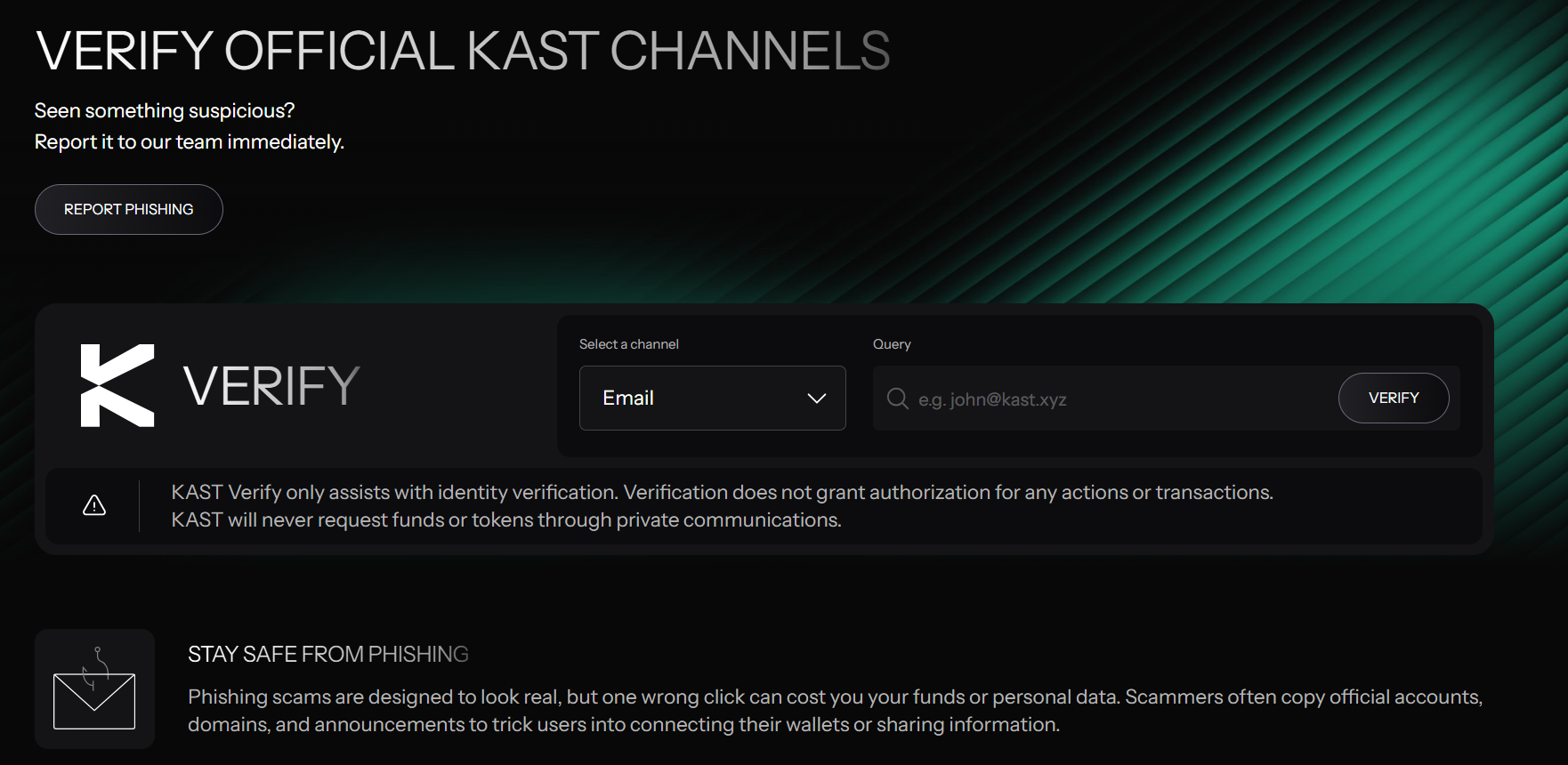
If something feels off, stop and verify it first. A quick check can help you avoid phishing attempts, fake accounts, and impersonation.
- Open the KAST website.
- Scroll to the footer at the bottom of the page.
- Find and click Verify.
- On the Verify page, choose the channel type from the dropdown, such as Email.
- In the search field, enter the detail you want to check, for example an email address.
- Click Verify.
- Review the result before you reply, click any links, or share any information.
You can also use the Report Phishing button on the same page if you spot something suspicious. Keep in mind that KAST Verify helps confirm identity only. It does not authorize any action or transaction, and KAST will never ask for funds or tokens through private messages.
The point for KAST users
The most useful fraud advice is not “watch out.” It is this:
Look at the first signal, not only the final charge.
Fraud is usually a chain. The faster you catch the first weak link, the easier it is to stop the rest.
Disclaimer: This content is for general informational purposes only and does not constitute investment, legal, tax, or financial advice. Digital assets involve high risk and may result in total loss. Please do your own research and consult professional advisors before making any decisions. Read full disclaimer here.