How Card Fraud Works and How KAST Helps You Handle It
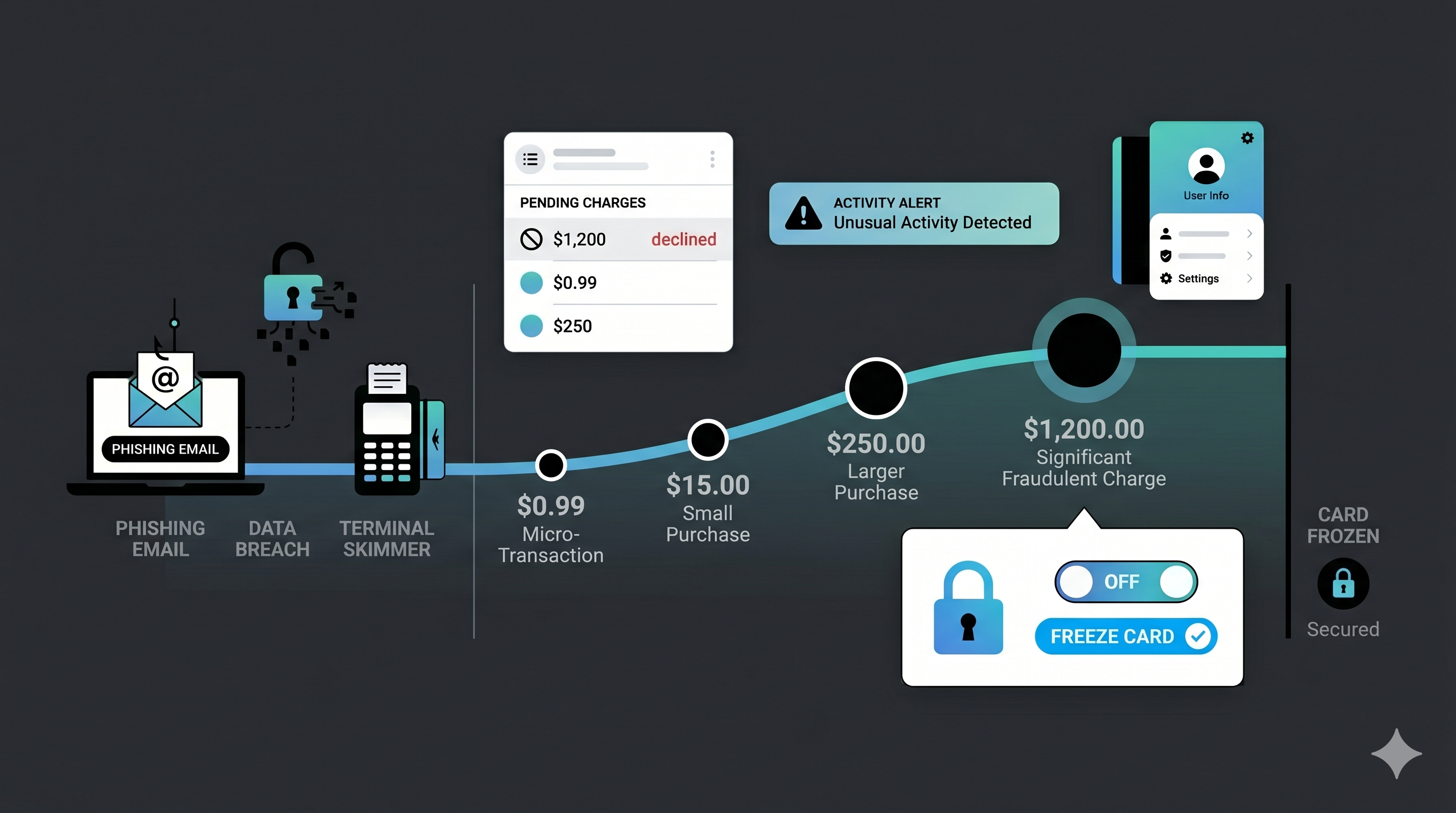
Card fraud usually does not start with a huge charge. It starts with something small, like a test authorization or a purchase attempt you did not make. The goal is simple: catch the pattern early and stop it from escalating.

Key Takeaways
- Fraud usually starts with small “test” charges before bigger spending attempts.
- Your fastest win is simple: freeze the card first, then sort out what happened.
- KAST has parameters in place to help you spot activity quickly and act before it escalates.
If you’ve ever opened your card activity and thought, “I definitely didn’t do that,” it might be time to take action.
Fraud usually starts small. A tiny charge. A login you didn’t trigger. A payment attempt that almost goes through. Nothing dramatic at first, then it ramps up if nobody stops it.
This guide walks you through how card fraud typically works, what to look for, and what to do immediately so you can stay in control when using KAST.
If this feels urgent:
If you’re seeing suspicious activity right now, freeze your card first. Then capture the details and contact support. Speed matters more than certainty.
How Does Card Fraud Work?
Fraud is rarely one clever move. It’s a sequence, and it’s repetitive.
It usually starts with your card details getting exposed. That can happen through a breach, phishing, skimming, or account takeover. Once someone has enough information, they usually don’t go big immediately. They test first.
That “test first, spend later” pattern is common and widely documented. Small transactions are often used to confirm a card is usable before larger ones hit.
If the test goes through, the next steps often look like:
- online purchases
- gift cards
- subscriptions
- repeated attempts across multiple merchants
Also worth knowing: a lot of fraud does not involve your physical card. It can be “card-not-present” fraud, meaning someone uses stolen details to transact online.
How Card Details Get Compromised
When card fraud is mentioned, most people imagine a stolen wallet. While that still happens, a lot of fraud today is card-not-present or account-related.
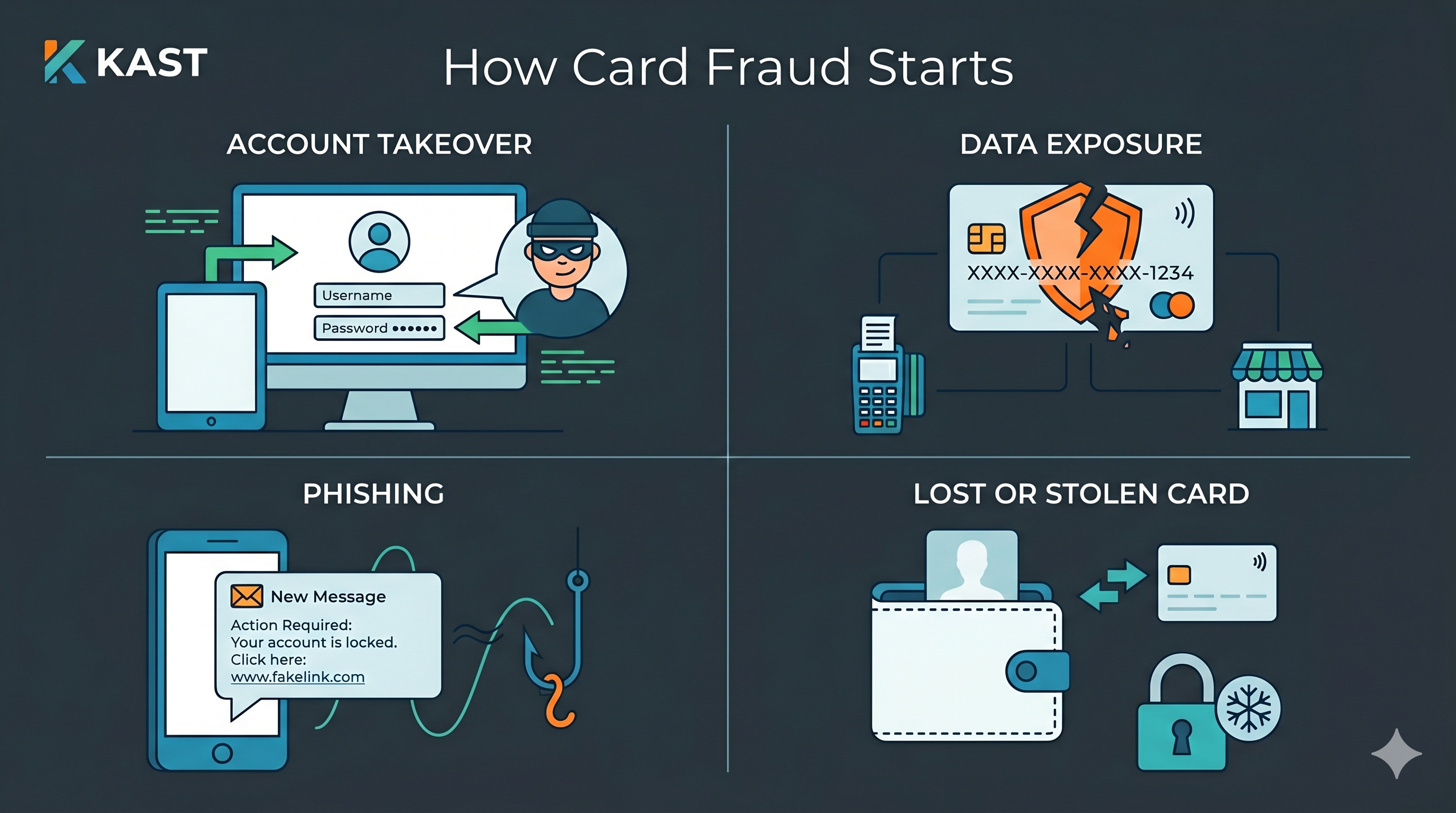
Here are the most common ways card fraud starts:
Account Takeover
Account takeover is when someone gets access to your card account and uses it or changes details. This can start with reused passwords, a compromised email inbox, or phishing.
Data Exposure You Never See
Sometimes your details are exposed through systems you never touch directly.
For example:
- merchant breaches
- compromised payment systems
- skimming devices on terminals or ATMs
You pay like normal, and somewhere in that flow the data gets copied. You find out later when transactions appear.
Phishing
Phishing is still doing a lot of the heavy lifting.
Fake support messages. Fake alerts. Cloned websites. You are asked to “verify” something, and you end up giving away login details or codes.
Lost Or Stolen Card
Sometimes it is still simple.
If your card is missing, assume it can be used until you freeze it.
Authorized, Declined, Reversed: What Those Statuses Usually Mean
Not every transaction you see is final. Payments move in stages, and your activity feed can show different parts of that process.
Here is the clean mental model:
- Authorized: the merchant received approval and the amount may be temporarily held
- Declined: the transaction did not go through
- Reversed: an authorization or hold was released
That does not mean “declined” and “reversed” are irrelevant. On the contrary, they can be very important.
Repeated declines can be a signal that someone is testing your card. Small authorizations that disappear can be part of the same “test first” pattern.
Real Fraud Signals vs Normal Activity
Not every “weird” transaction is fraud. Payments can look messy even when everything is working as expected.
The goal is not to judge a single charge in isolation. The goal is to spot patterns that do not match your normal behavior.
Signals that may indicate fraud:
- unfamiliar merchant names or locations
- transactions at times that do not match your behavior
- multiple charges in a short window
- small “test” amounts followed by larger attempts
- subscriptions you did not start
- login or verification messages you did not request
Micro-transactions are a common tactic used to check whether a card is active before larger fraud attempts.
Things that can look wrong but are often normal:
- merchant names that do not match the brand name you recognize
- temporary holds from hotels, rentals, or gas stations
- duplicate-looking charges that later settle correctly
- authorizations that reverse before a final charge appears
The goal is not to guess perfectly. The goal is to spot patterns quickly.
What To Do In The First 5 Minutes
Speed matters more than certainty.
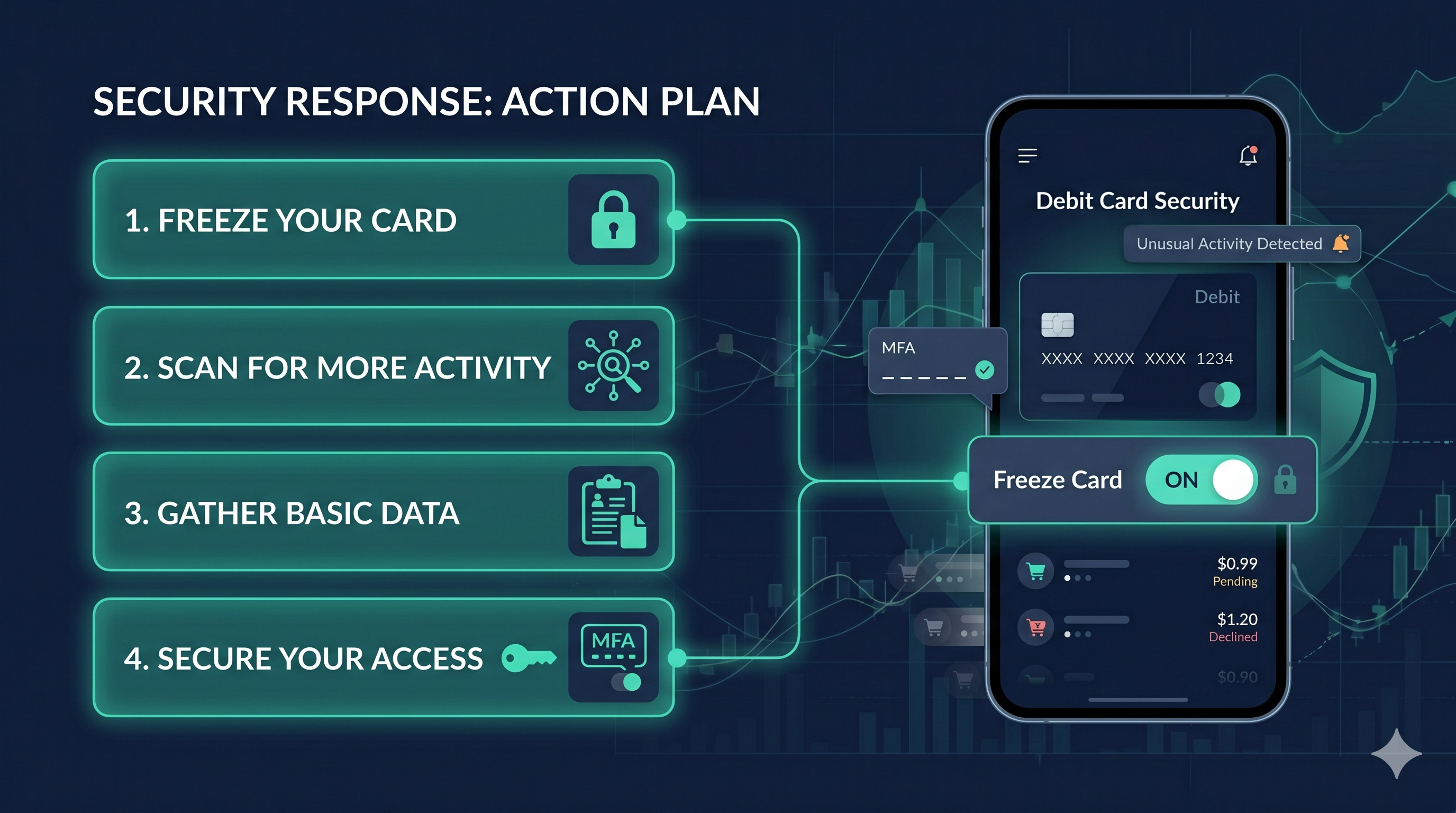
- Freeze your card immediately.
- Scan for more activity. Check whether it is one odd charge or a pattern.
- Gather the basics so support can move fast:
- merchant name as shown
- amount
- date and time
- your card’s last four digits
- Secure your account if there is any chance it is account-related:
- change your password
- confirm MFA is enabled
- secure your email account
Don’t respond to random “support” DMs or links.
If you got a message asking for codes, PINs, or logins, assume it’s phishing and contact support through official channels.
What Are Chargebacks?
A chargeback is a formal dispute process.
If the issue is a temporary hold (especially with hotels or rentals), a chargeback usually isn’t the first step. The faster path is confirming whether it’s a hold or a settled charge, then escalating it with the right details.
You use a chargeback when:
- your card was used without your consent
- a merchant charged you incorrectly and won’t fix it
- you paid for something that never arrived and the merchant won’t respond
Where people get into trouble is using it for valid charges. Forgot a subscription. Changed your mind. Didn’t like the product.
KAST calls that out clearly. Repeated or unjustified disputes can get flagged and lead to restrictions.
The smarter approach is simple. Check the details first. Contact the merchant if it makes sense. Use a chargeback when it’s actually the right tool.
How To Reduce Risk and Catch Issues Early
There’s no single switch that fixes fraud. It’s a mix of system protections and your habits.
On your side, a few things make a real difference:
- use strong, unique passwords
- keep MFA enabled
- don’t share OTPs or PINs
- keep transaction notifications on
- avoid entering card details on questionable sites
- check ATMs or terminals before using them
And when something looks off, run a quick check in your head. Do you recognize the merchant? Does the timing make sense? Are there multiple attempts? Did you get any unexpected login messages?
If more than one thing doesn’t add up, freeze the card and report it.
How KAST Handles Fraud
When something looks wrong, KAST moves you into a structured review process so it can be handled correctly.
Once you report something, Concierge reviews the case. They may ask for more details or documents. There’s an investigation period, and timelines can vary depending on the situation. After that, they guide you through what recovery options are available.
KAST doesn’t directly cancel transactions. Instead, they help you go through the proper dispute and chargeback flow.
To resolve this faster, here’s what to send concierge:
- merchant name exactly as shown in your activity feed
- amount(s) and timestamp(s)
- transaction status (authorized, declined, reversed, or settled)
- screenshots (activity + any receipts)
- whether you traveled recently or used the card at a hotel, rental, or gas station
- whether you received any unexpected login or verification messages
Clear details reduce back-and-forth and help the team move faster.
Why a hold can “disappear” but your balance still feels wrong
Certain merchants (especially hotels, rentals, and gas stations) place temporary holds that can be larger than the final amount.
Even when a hold is released, your balance may not update instantly because:
- the merchant’s release timing can vary
- weekends or processing windows can slow settlement
- a released hold can be followed by a separate final charge
If the hold hasn’t cleared within the expected timeframe, collect the details and send them to concierge so the team can investigate faster.
Fraud protection isn’t a magic shield
Fraud protection isn’t a single feature that blocks everything automatically. Even strong systems can’t stop every attempt in real time, especially if a transaction looks “normal” on paper.
What matters is fast detection, fast action, and a clear review process when something looks off.
What to Look Out For
Fraud rarely announces itself. It follows patterns, and those patterns are usually visible early.
If something looks off, do not wait until you feel sure.
And if it feels confusing, that’s normal. Payment flows can look messy even when nothing is actually wrong, which is why pattern and speed matter more than perfect certainty.
Freeze the card. Capture the details. Get help involved.
That is how you stop a small, strange charge from turning into a long list of them.
Rate this post
More from the blog
 Learn
LearnHow to Identify and Avoid Common Crypto and Payment Scams
Crypto scams are becoming more sophisticated as cryptocurrency adoption grows. This guide explains the most common cryptocurrency scams, how they work, and the warning signs to watch for so you can protect your assets.
Stella Abisinuola· Learn
LearnIs My Money Safe? Complete Comparison of KAST vs RedotPay vs Gemini vs Bybit
“Safe” is not one thing. This guide breaks it into three layers and shows how four major platforms reduce risk in different ways.
Valdrin Tahiri· Learn
LearnPhishing Emails Explained: How to Spot Them
Phishing scams try to pressure you into acting quickly by pretending to be a trusted company or person. This guide explains the common warning signs, how to verify suspicious messages safely, and the steps you can take to reduce the risk to your KAST account.
Valdrin Tahiri·